TCP Protocol
TCP (Transmission Control Protocol) is one of the core protocols in the Internet protocol suite, located at the transport layer. It provides a reliable, connection-oriented, byte-stream-based data transmission service. The main feature of TCP is ensuring that data is not lost, not duplicated, and arrives in order during transmission. The following is a detailed explanation of TCP's working principle and key features.
How TCP Works
TCP establishes a connection through a "three-way handshake," terminates a connection through a "four-way handshake," and uses acknowledgment mechanisms, retransmission mechanisms, and flow control during data transmission to ensure reliability.
1. Establishing a connection via a three-way handshake
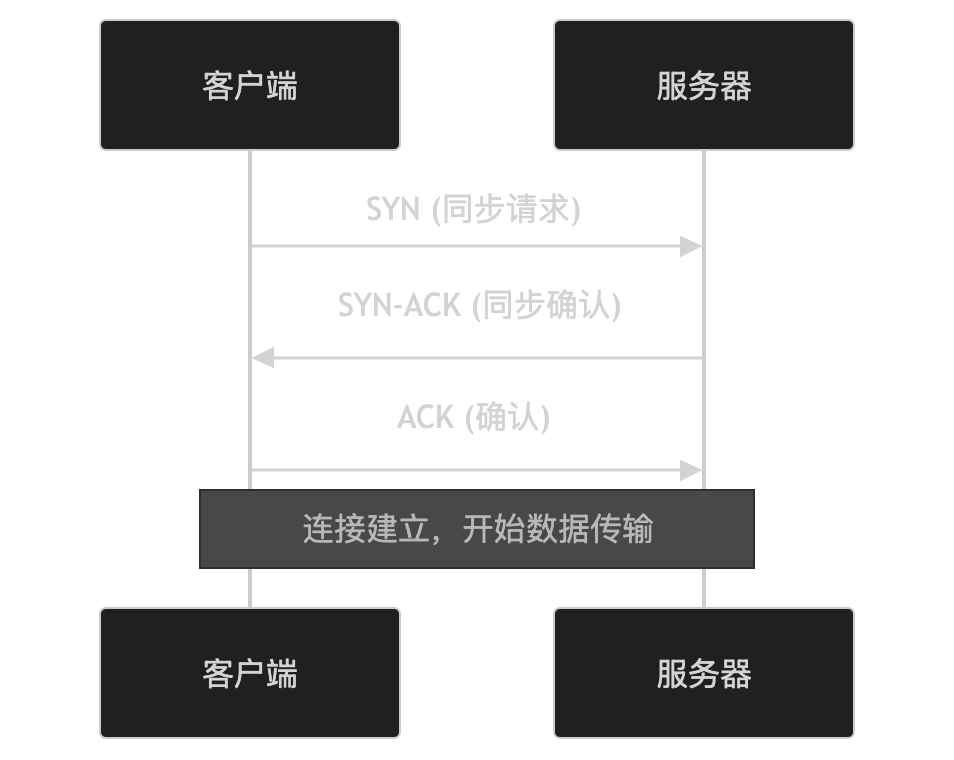
- SYN: The client sends a SYN packet (synchronization request) to the server, indicating a request to establish the connection.
- SYN-ACK: After receiving the SYN packet, the server replies with a SYN-ACK packet (synchronization acknowledgment), indicating agreement to establish the connection.
- ACK: After receiving the SYN-ACK packet, the client sends an ACK packet (acknowledgment), indicating that the connection has been established.
2. Data Transmission
After the connection is established, TCP ensures reliable data transmission through the following mechanisms:
- Sequence Numbers and Acknowledgment Numbers: Each data packet has a sequence number, and the receiver uses acknowledgment numbers to inform the sender which data has been successfully received.
- Retransmission Mechanism: If the sender does not receive an acknowledgment, it retransmits the data packet.
- Flow Control: Through the sliding window mechanism, the sending rate is dynamically adjusted to avoid receiver buffer overflow.
- Congestion Control: Through algorithms such as slow start and congestion avoidance, the sending rate is dynamically adjusted to avoid network congestion.
3. Terminating the Connection via a Four-Way Handshake
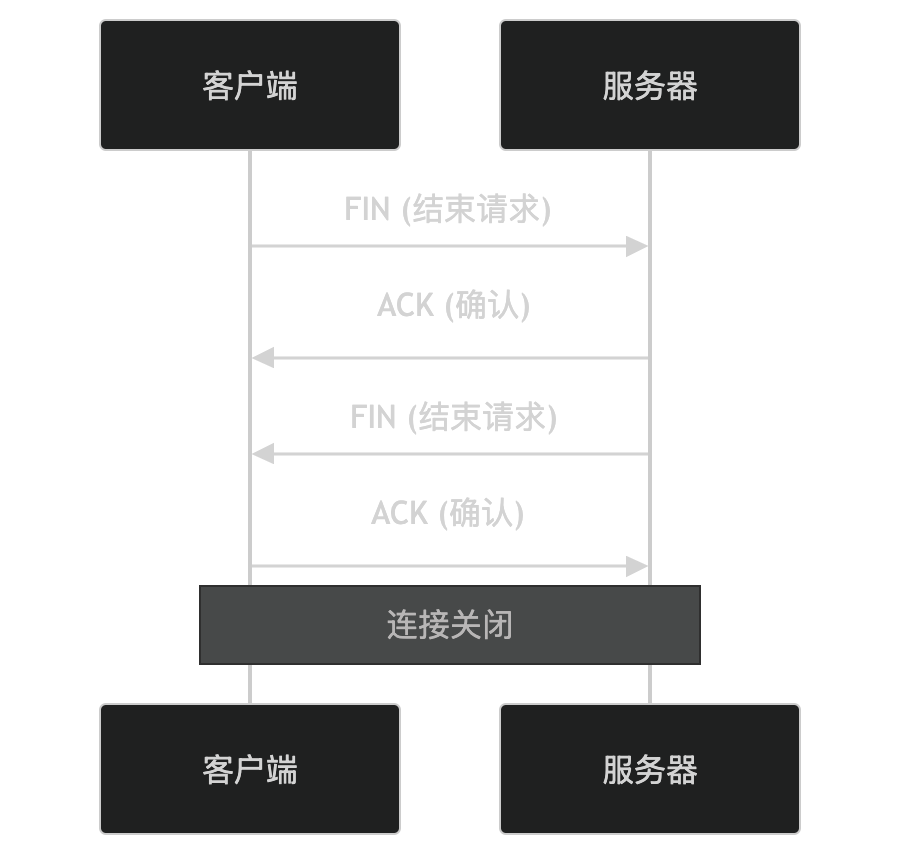
- FIN: The client sends a FIN packet, indicating a request to close the connection.
- ACK: After receiving the FIN packet, the server replies with an ACK packet, indicating acknowledgment.
- FIN: The server sends a FIN packet, indicating that the server is also ready to close the connection.
- ACK: After receiving the FIN packet, the client replies with an ACK packet, indicating acknowledgment. The connection is officially closed.
Key Features of TCP
-
Reliability:
- Through acknowledgment and retransmission mechanisms, it ensures that data is not lost or duplicated.
- It checks data integrity through checksums.
-
Connection-oriented:
- A connection needs to be established before data transmission, and the connection needs to be closed after transmission ends.
-
Ordering:
- Data arrives at the receiver in the order it was sent.
-
Flow Control:
- Through the sliding window mechanism, the sending rate is dynamically adjusted.
-
Congestion Control:
- Through algorithms such as slow start and congestion avoidance, network congestion is avoided.
Application Scenarios of TCP
TCP is widely used in scenarios that require reliable transmission, for example:
- Web browsing (HTTP/HTTPS)
- File transfer (FTP)
- Email (SMTP/POP3/IMAP)
- Remote login (SSH/Telnet)
In summary, TCP is a reliable, connection-oriented protocol that establishes a connection via a three-way handshake, closes a connection via a four-way handshake, and uses mechanisms such as acknowledgment, retransmission, flow control, and congestion control during data transmission to ensure reliable data delivery. If you are interested in a specific mechanism or application scenario of TCP, feel free to discuss further!
Other Extensions