ARP Protocol
ARP (Address Resolution Protocol) is a protocol used to resolve network layer addresses (such as IP addresses) into data link layer addresses (such as MAC addresses).
ARP is widely used in Local Area Networks (LANs) to help devices determine the physical address of the target device during communication.
How ARP Works
The core function of ARP is to resolve IP addresses into MAC addresses through broadcast requests and unicast responses.
1. ARP Request
When a device needs to communicate with a target device and does not know the target device's MAC address, it sends an ARP request broadcast packet asking, "Who owns this IP address?"
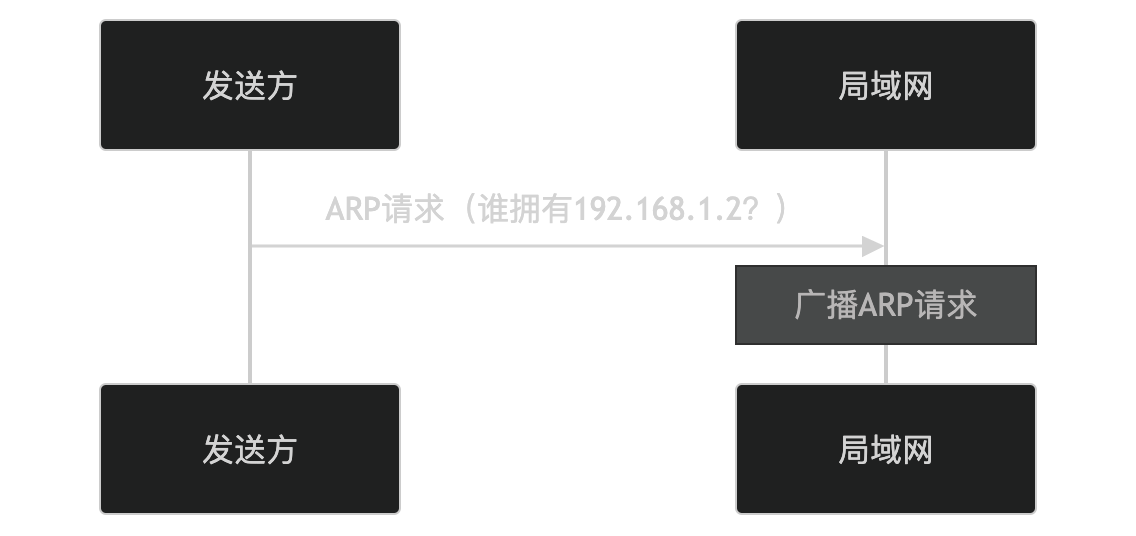
- The sender broadcasts an ARP request packet to ask for the MAC address corresponding to the target IP address.
- All devices on the local network will receive the request.
2. ARP Response
If a device finds that its IP address matches the target IP address in the ARP request, it sends an ARP response packet to inform its MAC address.
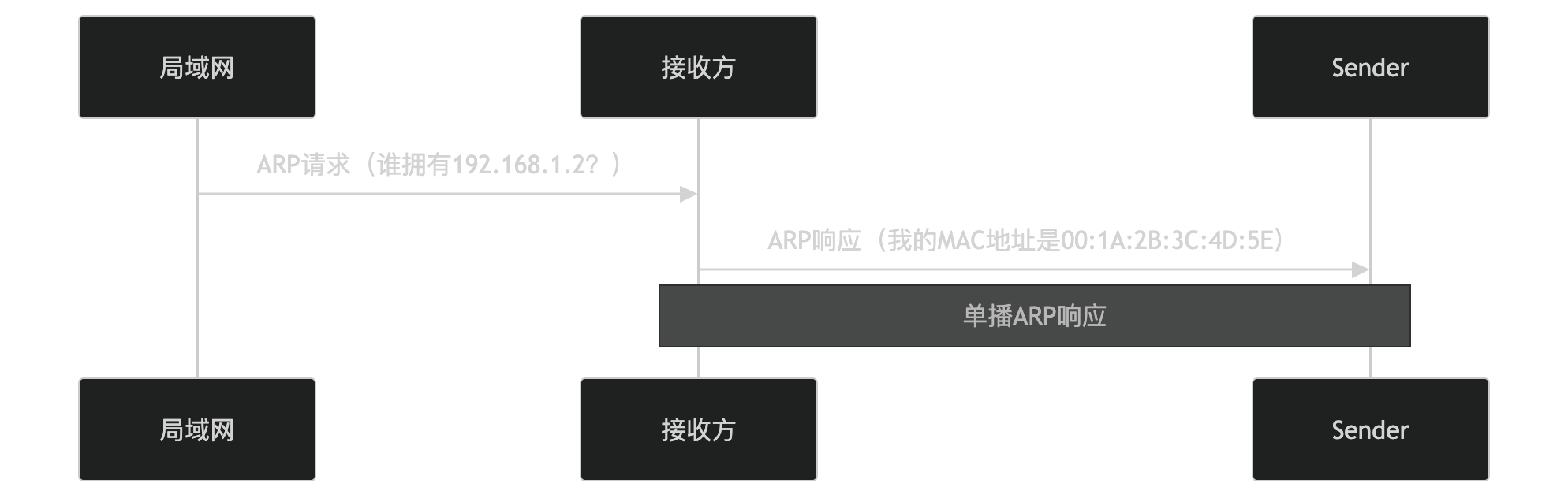
- The receiver sends an ARP response packet to inform its MAC address.
- The ARP response packet is unicast and is sent only to the requester.
3. ARP Cache
After receiving the ARP response, the sender stores the mapping between the IP address and MAC address in the local ARP cache for direct use in subsequent communication.

- The ARP cache is periodically updated or expires to ensure the accuracy of the mapping.
Key Features of ARP
-
IP-to-MAC address mapping:
- Resolves network layer addresses into data link layer addresses.
-
Broadcast request and unicast response:
- Sends ARP requests via broadcast and ARP responses via unicast.
-
ARP Cache:
- Stores IP-to-MAC address mappings to reduce duplicate ARP requests.
-
Used within LANs:
- ARP is mainly used in LANs and is not applicable to cross-network communication.
Application Scenarios of ARP
ARP is widely used in the following scenarios:
- LAN communication:
- When devices communicate within a LAN, they need to know the MAC address of the target device.
- Router forwarding:
- When forwarding packets, routers need to know the MAC address of the next hop.
- Network troubleshooting:
- Use the ARP command to view the local ARP cache and troubleshoot network issues.
ARP Security
ARP itself is insecure and is vulnerable to the following attacks:
- ARP Spoofing:
- An attacker forges ARP responses to associate their MAC address with the target IP address.
- ARP Flooding:
- An attacker sends a large number of forged ARP requests to exhaust network resources.
To improve security, the following protective measures can be used:
- Static ARP table: Manually configure the mapping between IP addresses and MAC addresses.
- ARP detection: Monitor ARP traffic on the network to detect abnormal behavior.
- Network isolation: Use VLANs or subnets to isolate devices and reduce the impact of ARP attacks.
ARP Alternatives
In some scenarios, the following alternatives can be used:
- RARP(Reverse ARP):
- Resolve MAC addresses into IP addresses.
- NDP(Neighbor Discovery Protocol):
- Replaces ARP in IPv6, providing address resolution and other functions.
In summary, ARP is a protocol used to resolve IP addresses into MAC addresses, implementing address mapping through broadcast requests and unicast responses. It is widely used in LAN communication and network troubleshooting, but attention must be paid to its security issues.
Other Extensions