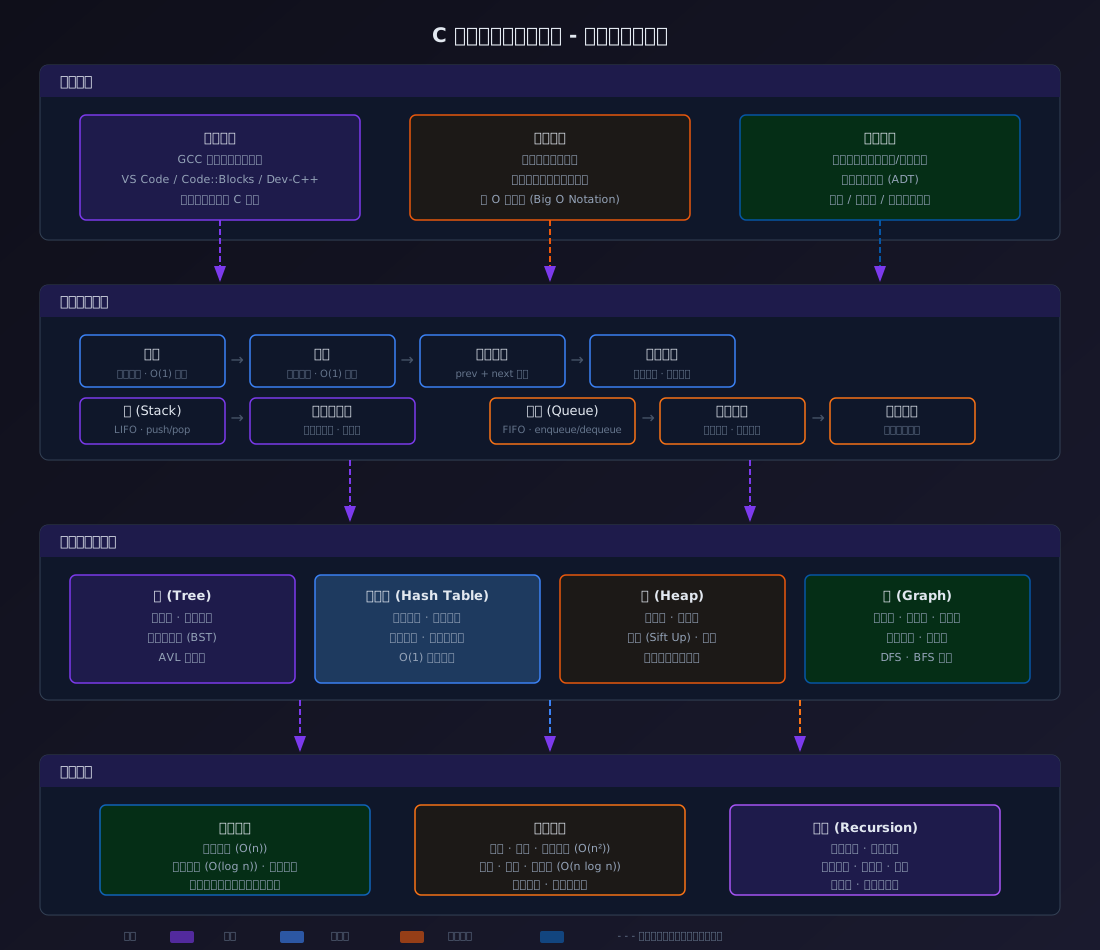
C Language Data Structures and Algorithms

Data Structures and Algorithms (DSA) are the core foundation of computer science, determining the efficiency and quality of how programs process data.
Data structures focus on how data is organized and stored in a computer, such as arrays, linked lists, trees, graphs, etc.
Algorithms focus on how to efficiently accomplish specific tasks on top of these data structures, such as searching, sorting, traversing, etc.
The two complement each other — choosing the right data structure is often a prerequisite for designing efficient algorithms.
Who is this tutorial for?
This tutorial is suitable for developers with a foundation in C language.
View the C language course:https://www.example.com/cprogramming/c-tutorial.html
Why learn Data Structures and Algorithms with C Language?
C language is close enough to the underlying layer, without excessive syntactic sugar and automatic memory management mechanisms masking the essence of data structures.
Through C language, learners need to manually manage memory, manipulate pointers, and build structs. This process helps us truly understand:
| Low-level concepts | How they are reflected in C language |
|---|---|
| Memory layout | How arrays are stored contiguously in memory and accessed directly through pointer arithmetic |
| Dynamic memory | How linked list nodes aremallocCreated and connected on the heap |
| Pointer mechanism | How complex structures like trees and graphs achieve node associations through pointers |
| Call stack | How recursive calls are implemented using the call stack, and how stack frames are created and destroyed |
Although high-level languages (such as Python, Java) are convenient to use, they encapsulate memory management and pointer operations, which is not conducive to understanding the underlying essence of data structures.
The focus of learning data structures and algorithms is not to memorize code, but to understand how data exists in memory and how it is manipulated.