Lua Loops
In many cases, we need to perform certain regular repetitive operations, so in the program we need to repeatedly execute certain statements.
A group of repeatedly executed statements is called the loop body, and whether it can continue to repeat is determined by the loop termination condition.
A loop structure is a flow structure that repeatedly executes a certain segment of a program under certain conditions. The program that is repeatedly executed is called the loop body.
A loop statement is composed of two parts: the loop body and the loop termination condition.
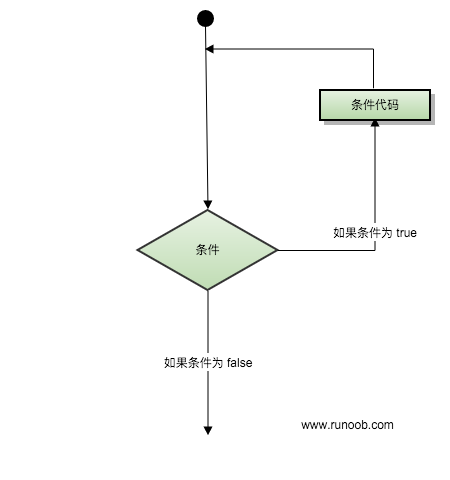
The Lua language provides the following loop processing methods:
| Loop Type | Description |
|---|---|
| while loop | When the condition is true, the program repeatedly executes certain statements. It checks whether the condition is true before executing the statements. |
| for loop | Repeatedly executes specified statements, and the number of repetitions can be controlled in the for statement. |
| repeat...until | Repeatedly executes the loop until the specified condition becomes true |
| Nested Loops | You can nest one or more loop statements within a loop (while do ... end; for ... do ... end; repeat ... until;) |
Loop Control Statements
Loop control statements are used to control the flow of the program to implement various structural ways of the program.
Lua supports the following loop control statements:
| Control Statement | Description |
|---|---|
| break statement | Exits the current loop or statement and starts executing the statement immediately following it. |
| goto statement | Transfers the control point of the program to a label. |
Infinite Loop
In the loop body, if the condition is always true, the loop statement will execute forever. The following uses a while loop as an example:
Example
do
print("The loop will execute forever")
end